
How the Sundance Film Festival May Influence Boulder Real Estate, Festival Rentals, and Long-Term Property Values
Prepared by Catherine McCain Burgess
Important Note About This Report
This report combines three types of information:
Verified facts, including announced festival dates, Boulder licensing rules, official lodging guidance, and historical Sundance economic impact data.
Current market indicators, including publicly advertised rental rates and estimates from local lodging and property management sources.
Forward-looking scenarios, including projections for Incremental Sundance Value, neighborhood performance, and potential future rental income.
No reliable historical dataset yet exists for Sundance rental performance or Sundance-related residential appreciation in Boulder because the first Boulder festival will not occur until January 2027. The appreciation and rental projections in this report are not appraisals, guarantees, or statements of established market value.
Executive Summary
The Sundance Film Festival will make its Boulder debut from January 21 through January 31, 2027.
Its arrival represents an important cultural and economic development for Boulder. Homeowners, buyers, and investors are understandably asking:
- Will Sundance increase Boulder property values?
- Which neighborhoods and property types may benefit most?
- How much rental income might a well-positioned home produce?
- Will Boulder experience the same real estate effect that Park City experienced?
The central conclusion of this report is:
Sundance is likely to influence Boulder real estate first through festival rental income and property marketing, and later, if the festival succeeds over multiple years, through measurable resale premiums.
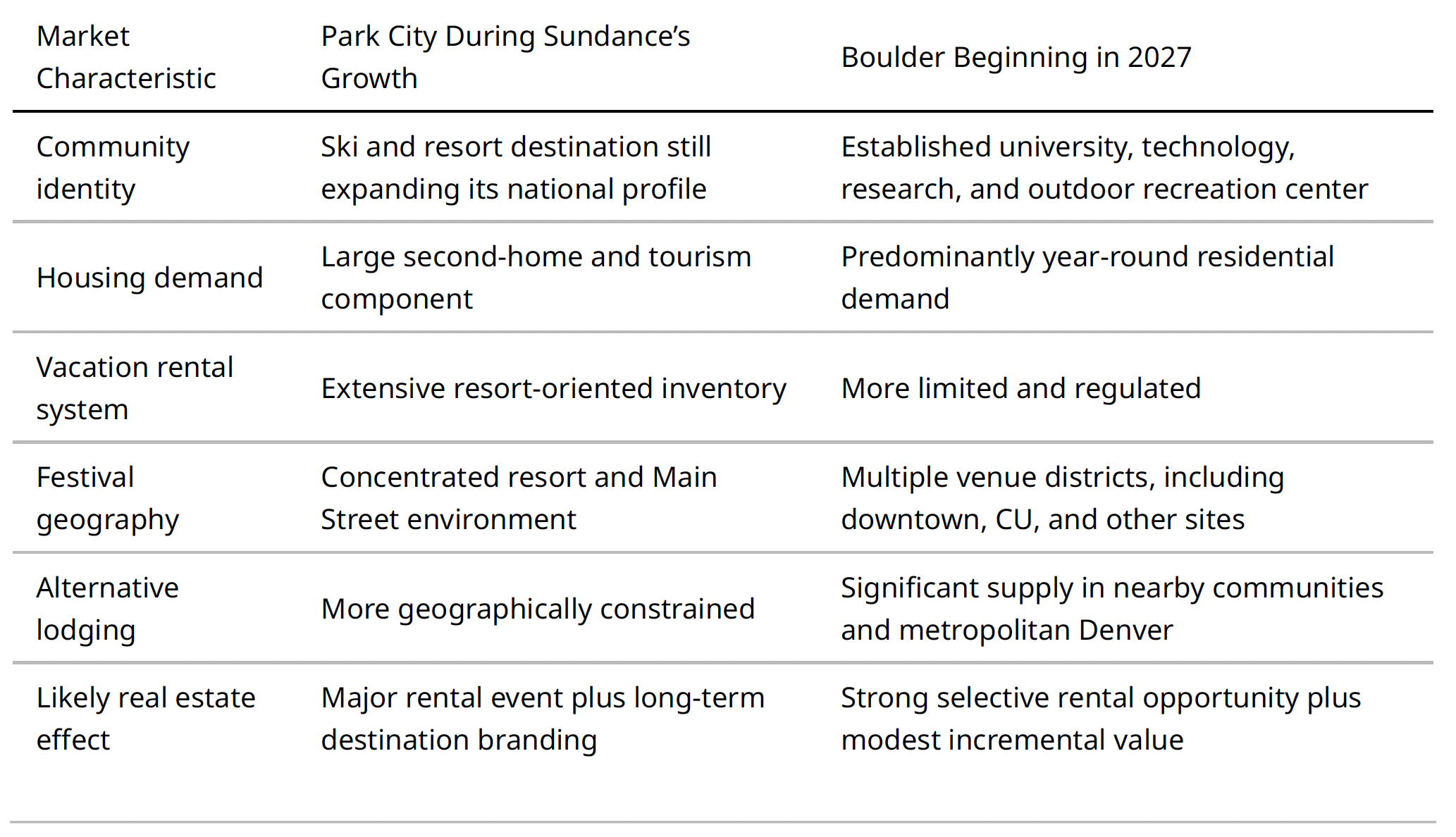
Boulder is unlikely to repeat Park City’s exact experience. Park City developed into a resort and second-home destination while Sundance itself was growing into a globally recognized institution. Boulder enters the relationship as an already mature, expensive, and internationally known housing market with a diversified economy and a highly regulated rental environment.
The likely result is a selective rather than universal benefit:
- Strong festival-week rental demand for legally eligible, well-presented homes.
- The greatest advantage for homes near venues, downtown amenities, and effective transportation.
- A smaller benefit for properties that are distant, difficult to access, or poorly configured for groups.
- A possible long-term resale premium for properties with documented rental performance.
- A modest citywide branding effect rather than an immediate Boulder-wide surge in prices.

FIVE KEY FINDINGS
1. Rental Income Is Likely to Appear Before Appreciation
Festival rental rates can be observed immediately after the first event. A resale premium will require several years of evidence.
During 2027, the market will begin learning:
- Which neighborhoods guests prefer.
- How much renters actually pay.
- How long they stay.
- Which properties attract corporate renters.
- How much supply enters the market.
- Whether published asking rates convert into completed bookings.
Sundance has launched an official Boulder lodging platform featuring hotels and vacation homes selected for proximity to venues, neighborhoods, and transportation routes.
The distinction between asking rates and successful rental rates is essential. Some Boulder homes have already been advertised above $5,000 per night, but published asking prices do not establish market value or demonstrate that those homes will book.
2. Appreciation Is Likely to Be Selective and Gradual
Sundance alone is unlikely to outweigh the fundamental forces that determine Boulder home values, including:
- Mortgage rates.
- Inventory.
- Household income.
- Employment conditions.
- Property condition.
- Buyer confidence.
- The broader economy.
- Instead, Sundance may become an additional amenity that some buyers value.
The effect is expected to be greatest for homes that combine:
- Strong venue access.
- Walkability.
- Attractive architecture and interiors.
- Useful bedroom and bathroom configurations.
- Parking.
- Gathering space.
- Privacy.
- Legal eligibility for festival rentals.
3. Boulder Will Not Replicate Park City’s Exact Real Estate Experience
The Sundance Film Festival was associated with Park City for more than four decades. During that period, the event became a major contributor to Utah’s visitor economy. Sundance reported that its 2025 festival produced an estimated statewide economic impact of $196.1 million, the highest nominal impact in its history. The 2024 report estimated a statewide economic impact of approximately $132 million.
Those economic impact figures should not be mistaken for residential appreciation figures. There is no credible basis for attributing a specific percentage of Park City’s decades of home-price growth solely toSundance.
Park City’s growth was also shaped by:
- Ski resort expansion.
- Second-home demand.
- Access to Salt Lake City International Airport.
- Limited mountain housing supply.
- National wealth creation.
- Tourism growth.
- Extensive vacation rental infrastructure.
Sundance’s most defensible contribution was that it repeatedly introduced affluent and influential visitors to Park City, strengthened the city’s international brand, and created an exceptionally valuable annual lodging period.
Boulder begins from a different position.
4. Boulder’s Limited Rental Supply Could Support Pricing, but Regional Supply Will Limit the Ceiling
Boulder has created a Festival Lodging Rental License allowing eligible properties to be rented for 29days or fewer per year in connection with designated major festivals.
The city has also expanded the program to make more housing potentially available, including certain tenant-occupied properties with landlord approval and other eligible rental units.
That creates two competing forces.
Upward pressure on rates
- Boulder has limited lodging within the city.
- Many visitors will prefer to stay near screenings and events.
- Luxury homes are scarcer than ordinary hotel rooms.
- Corporate groups may require multiple bedrooms, private meeting areas, and kitchens.
Downward pressure on rates
- Boulder is deliberately expanding festival rental supply.
- The city has roughly 3,000 hotel rooms, with far more lodging available in the surrounding region.
- Louisville, Lafayette, Superior, Broomfield, Longmont, Westminster, and Denver provide alternatives.
- Additional hotel development may increase competition over time.
Boulder may experience high festival rates without reaching the extreme and sustained pricing found in the most constrained portions of the Park City market.
5. Demonstrated Rental History Could Eventually Influence Resale Value
A future buyer is unlikely to pay substantially more for a home simply because an owner believes it couldrent during Sundance.
A buyer may assign greater value when the owner can document:
- Completed bookings.
- Nightly and total rental revenue.
- Length of stay.
- Repeat corporate renters.
- Operating expenses.
- Licensing history.
- Guest reviews.
- Reliable net income.
This distinction separates theoretical rental potential from a demonstrated income-producing feature.
Understanding Incremental Sundance Value
What the Term Means
Incremental Sundance Value, or ISV, is the estimated additional market value a property may realize because of Sundance, above the value it would likely have achieved without the festival.
ISV is:
- Not total appreciation.
- Not annual appreciation.
- Not guaranteed income.
- Not an appraisal adjustment that can currently be measured from comparable sales.
It is a scenario-based estimate of how much additional value buyers might eventually assign to festival-related advantages.
A Simple Example
Assume a Boulder home is worth $2,000,000 today.
Without Sundance, broader Boulder market conditions might cause it to be worth $2,700,000 at a future date.
Now assume Sundance succeeds in Boulder and this particular home develops:
- A desirable festival location.
- A documented rental record.
- Repeat renter demand.
- Enhanced appeal to future buyers.
If the property instead sells for $2,808,000, its Incremental Sundance Value would be:
- Future value without Sundance: $2,700,000
- Future value with the Sundance-related advantage: $2,808,000
- Additional value: $108,000
- ISV relative to the non-Sundance value: 4%
The 4% represents a one-time difference in value relative to the market without Sundance. It does not represent an additional 4% of appreciation every year.
ISV Is a Comparison With a Hypothetical Alternative
The concept asks:
“What might this property be worth with a successful long-term Sundance presence compared with what the same property might have been worth under otherwise similar market conditions without Sundance?”
That alternative cannot be observed directly. Once Sundance begins in Boulder, there will not be an identical second Boulder operating without the festival.
For that reason, ISV can only be evaluated through indirect evidence such as:
- Differences among neighborhoods.
- Rental performance.
- Buyer behavior.
- Comparable property analysis.
- Resale marketing.
- Changes in how buyers value festival access.
Why the Premium Will Differ by Property
Sundance is not expected to affect all homes equally.
Example A: Strong Potential ISV
A renovated four-bedroom home near downtown with:
- Legal rental eligibility.
- Easy walking access to festival activity.
- Three or more bathrooms.
- Off-street parking.
- Attractive gathering space.
- Strong rental history.
Example B: Limited Potential ISV
A home far from venues with:
- Difficult winter access.
- Limited parking.
- No rental eligibility.
- No meaningful rental history.
- A layout poorly suited to groups.
Both properties may benefit from Boulder’s enhanced recognition, but the first has a much clearer festival-specific economic advantage.
Incremental Sundance Value Scenarios
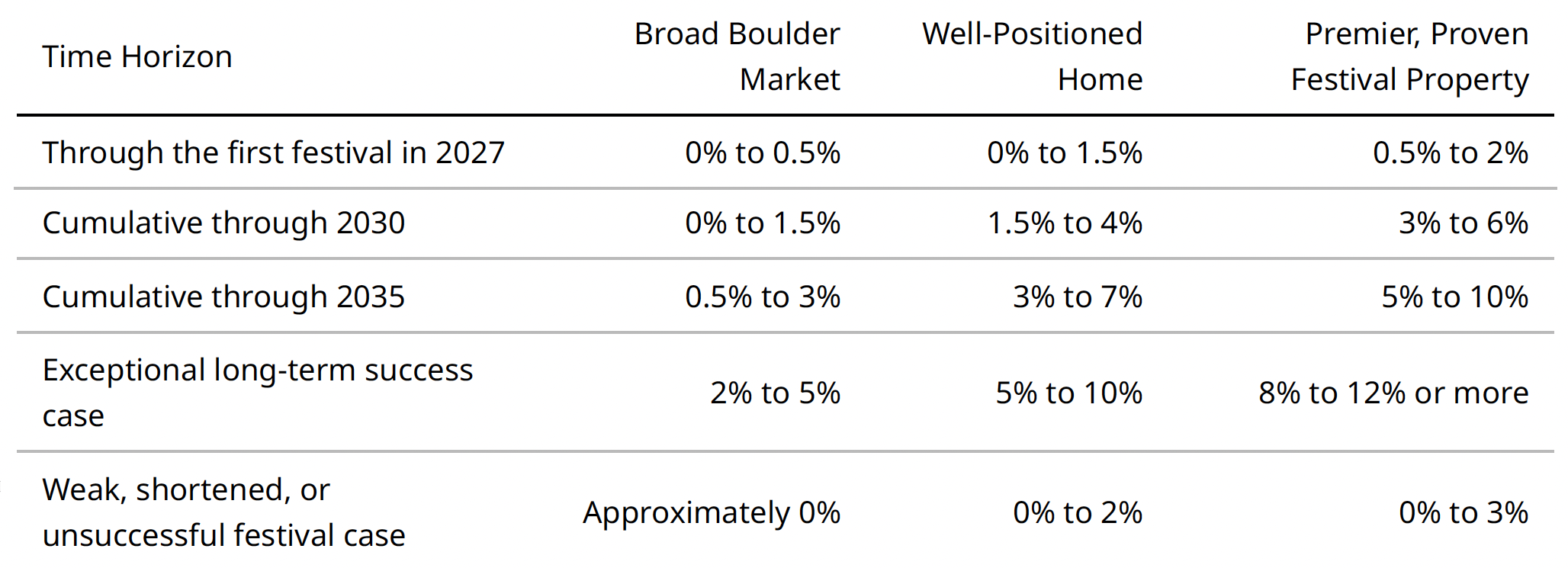
The following ranges are analytical scenarios prepared for this report. They are not derived from an existing Boulder sales dataset because no post-Sundance Boulder sales history yet exists.
They represent the possible cumulative value difference attributable to Sundance, above what the property might otherwise have been worth.
Why These Ranges Were Revised
Earlier projections placed a 6% to 12% premium for premier luxury estates within the central 2035 scenario.That range is more appropriate as an upper success scenario rather than a base expectation.
Until Boulder has completed bookings, repeat festival years, and festival-related sales evidence, the more defensible central expectation is:
- Little or no immediate citywide premium.
- A possible low single-digit benefit to selected homes by 2030.
- A larger premium by 2035 only for properties with sustained and documented advantages.
Converting the Percentages Into Seller-Relevant Dollar Amounts
The estimated dollar impact depends on the property’s value at the time of sale, not only its current value.
The following examples apply ISV percentages to hypothetical values solely to illustrate scale.
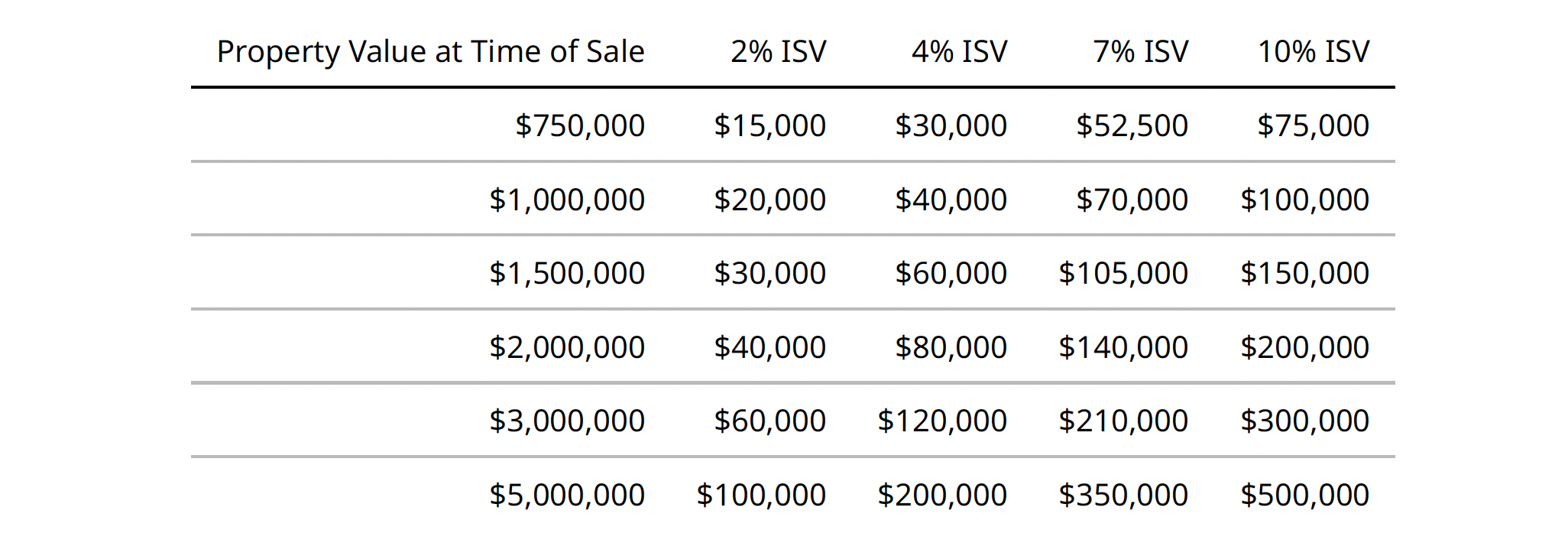
These figures do not mean a seller will automatically obtain the stated premium. They show what the percentage scenarios mean in dollar terms.
Festival Rental Income
Official and Published Market Indicators
Sundance’s reported 2027 home-rental guidance ranges from approximately:
- $250 per night for certain one-bedroom accommodations.
- Approximately $1,386 per night for an 11-night rental of a four-bedroom, 2.5-bath home.
The published guidance also notes that larger five- to seven-bedroom homes may command additional premiums during peak dates.
A Boulder property management company currently estimates potential total festival revenue of:
- Approximately $5,000 to $10,000 or more for condominiums.
- Approximately $10,000 to $25,000 or more for single-family homes.
- Approximately $25,000 to $55,000 or more for luxury properties.
These are third-party marketing estimates, not completed 2027 transaction data, but they provide a useful local indicator.
Projected Successful 2027 Rental Rates
The following ranges estimate plausible completed booking rates rather than the highest possible advertised rates.
They are informed by:
- Sundance pricing guidance.
- Current local property management estimates.
- Boulder’s lodging constraints.
- Anticipated regional competition.
- The absence of any completed Boulder Sundance rental history.
Core 2027 Booking Scenario
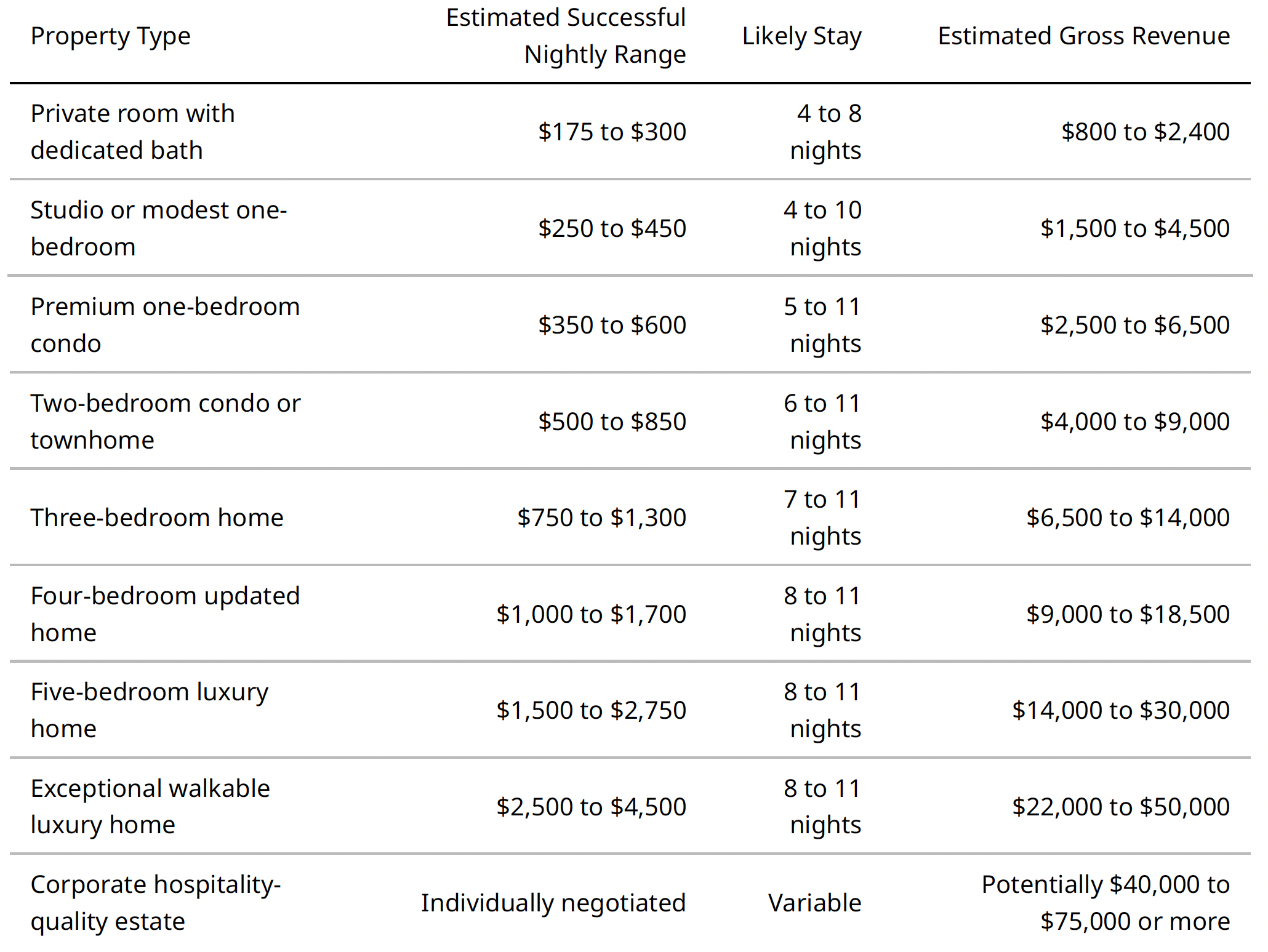
The final category should be treated separately from an ordinary residential rental. Homes used for gatherings, media activity, or brand hospitality may face additional zoning, occupancy, insurance, parking, noise, safety, and event permitting requirements. A festival lodging license does not automatically authorize a residence to operate as an event venue.
What “Successful Rate” Means
A successful rental rate is not necessarily the highest price an owner could advertise.
It is a rate that is reasonably likely to:
- Attract a qualified renter.
- Produce an appropriate length of stay.
- Compensate the owner for inconvenience and risk.
- Avoid a late vacancy caused by overpricing.
- For the inaugural festival, many owners may begin with high asking rates and later reduce them.
- The most meaningful 2027 data will be:
- Completed rental amounts.
- Booking dates.
- Cancellations.
- Lengths of stay.
- Property characteristics.
- Actual owner net proceeds.
Gross Revenue Is Not Net Income
Owners should deduct:
- Licensing and application fees.
- Lodging and sales taxes.
- Management commissions.
- Platform fees.
- Professional cleaning.
- Linens and supplies.
- Maintenance.
- Snow removal.
- Incremental insurance.
- Security deposits or damage coverage.
- Pet or furniture relocation.
- Personal storage.
- The owner’s substitute lodging.
Illustrative Net Income Conversion
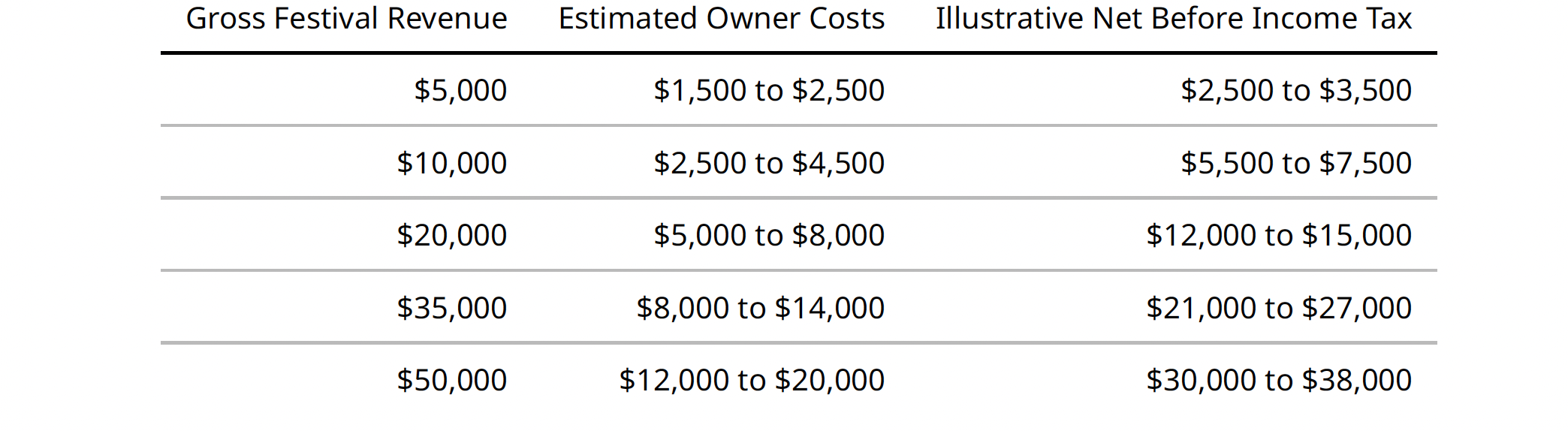
Actual expenses may be materially higher when owners use full-service management, temporarily relocate a household, store valuables, or make extensive preparations.
Area-by-Area Outlook
Venue locations and transportation patterns will matter substantially. More than a dozen Boulder venues have been identified for the inaugural festival, including facilities downtown, at the University of Colorado, and elsewhere in the city.
The following area ratings are scenario-based assessments rather than established market measurements.
Downtown Boulder
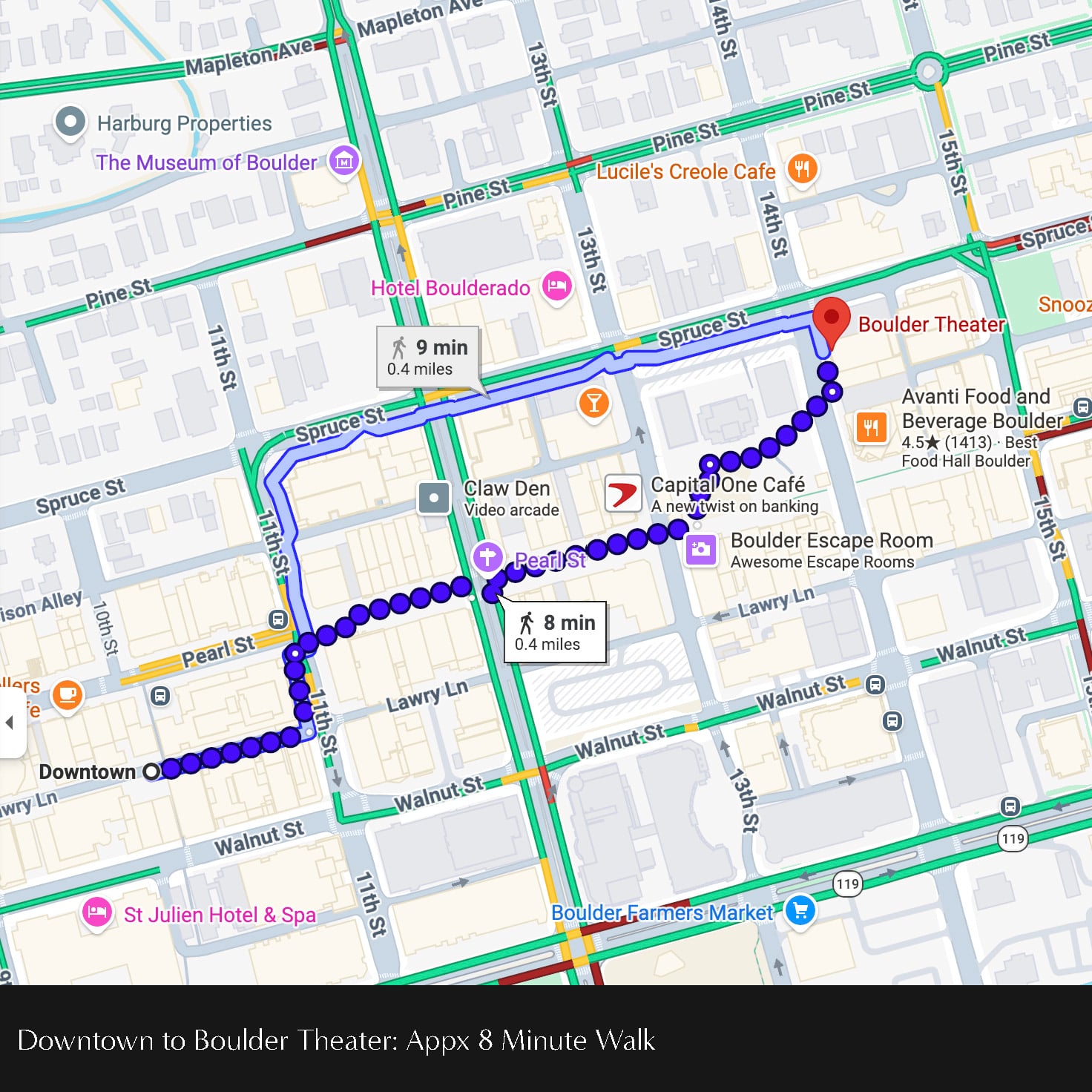
Rental outlook: Very strong
Potential ISV: High
Likely renter: Executives, filmmakers, sponsors, media professionals, and attendees prioritizing walkability
Advantages
- Direct access to restaurants and Pearl Street.
- Likely concentration of social and hospitality activity.
- Reduced dependence on a car.
- Strong appeal for shorter stays and executive travelers.
Constraints
- Limited parking.
- Noise and event activity.
- Smaller average unit sizes.
- Condominium and HOA restrictions.
Projected Successful Rental Performance
- One-bedroom condo: $400 to $650 per night
- Two-bedroom condo: $650 to $1,000 per night
- High-quality townhouse or house: $1,000 to $2,500 or more per night
Projected 2035 ISV Scenario
- Typical property: 2% to 5%
- Exceptional walkable property with proven rentals: 5% to 9%
Mapleton Hill
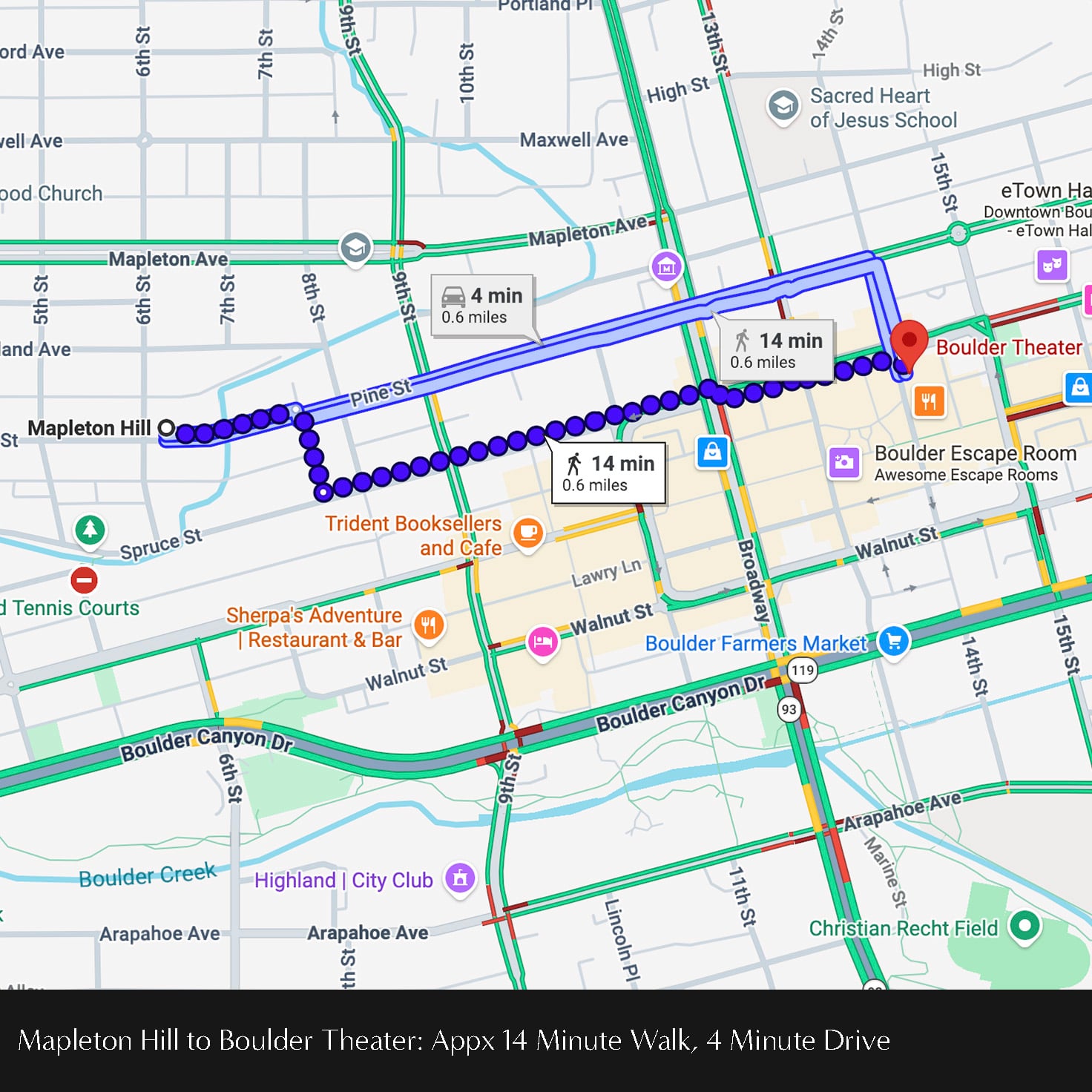
Rental outlook: Very strong
Potential ISV: Very high for suitable homes
Likely renter: Corporate executives, production leaders, sponsors, and affluent groups
Advantages
- Historic architecture and neighborhood prestige.
- Walkability to downtown.
- Larger homes than many downtown properties.
- Strong luxury and privacy appeal.
Constraints
- Historic-home layouts may offer fewer bathrooms.
- Limited parking on some blocks.
- Older systems and steep winter walks may affect suitability.
Projected Successful Rental Performance
- Three-bedroom home: $1,000 to $1,600 per night
- Four-bedroom luxury home: $1,500 to $2,750 per night
- Exceptional estate: $2,750 to $5,000 or more per night
Projected 2035 ISV Scenario
- Well-positioned home: 4% to 7%
- Premier proven property: 6% to 10%
Whittier
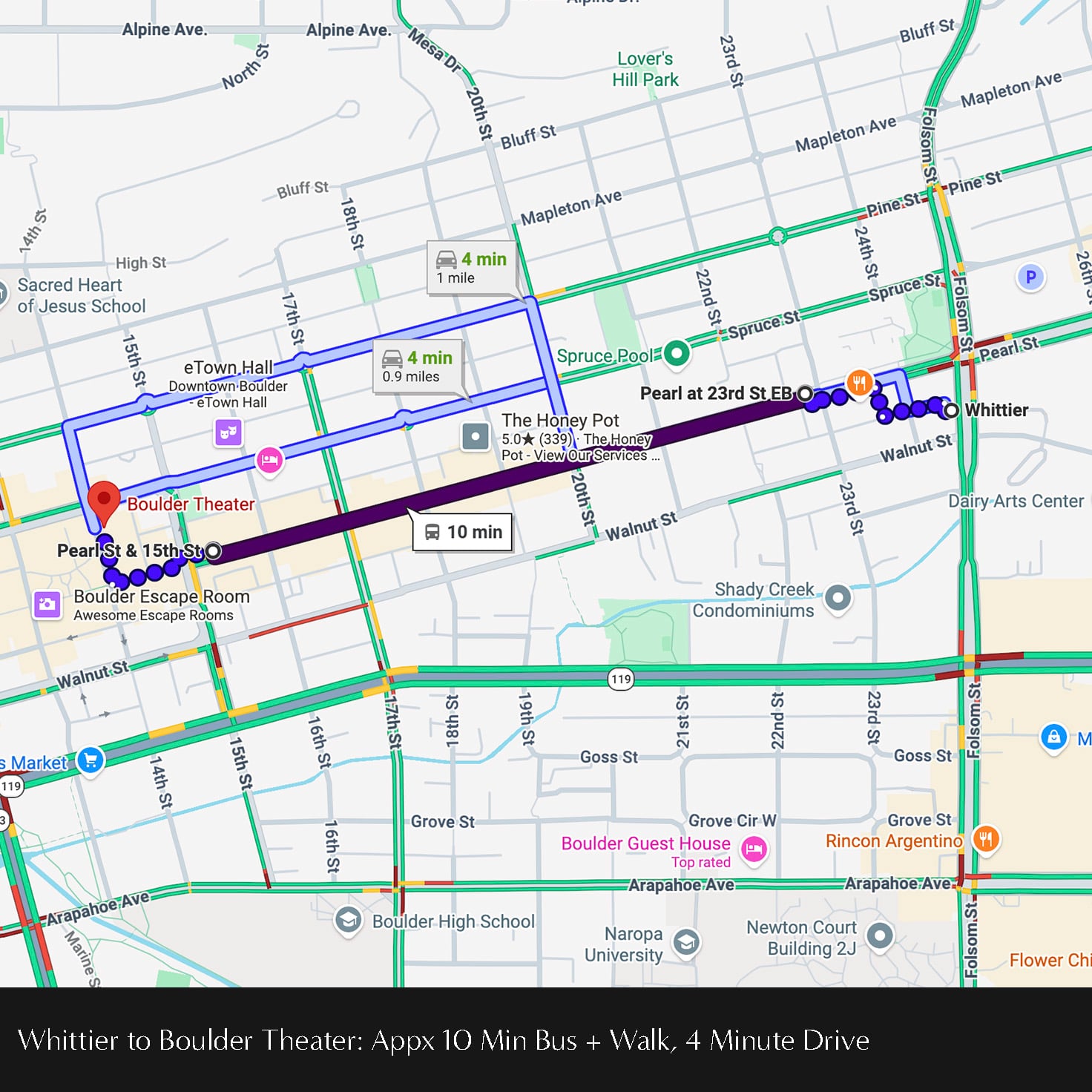
Rental outlook: Strong
Potential ISV: Moderate to high
Likely renter: Filmmakers, creative teams, professionals, and small groups
Advantages
- Access to both downtown and CU.
- Attractive historic housing.
- Broad range of price points and property sizes.
- Good bicycle and pedestrian access.
Constraints
- Highly variable property condition.
- Some homes are small or have limited parking.
- Rental performance may differ significantly block by block.
Projected Successful Rental Performance
- One- or two-bedroom unit: $350 to $750 per night
- Three-bedroom home: $750 to $1,300 per night
- Renovated four-bedroom home: $1,200 to $2,000 per night
Projected 2035 ISV Scenario
- Typical property: 2% to 5%
- Strong rental property: 4% to 7%
West Pearl, Sanitas, and Close-In West Boulder
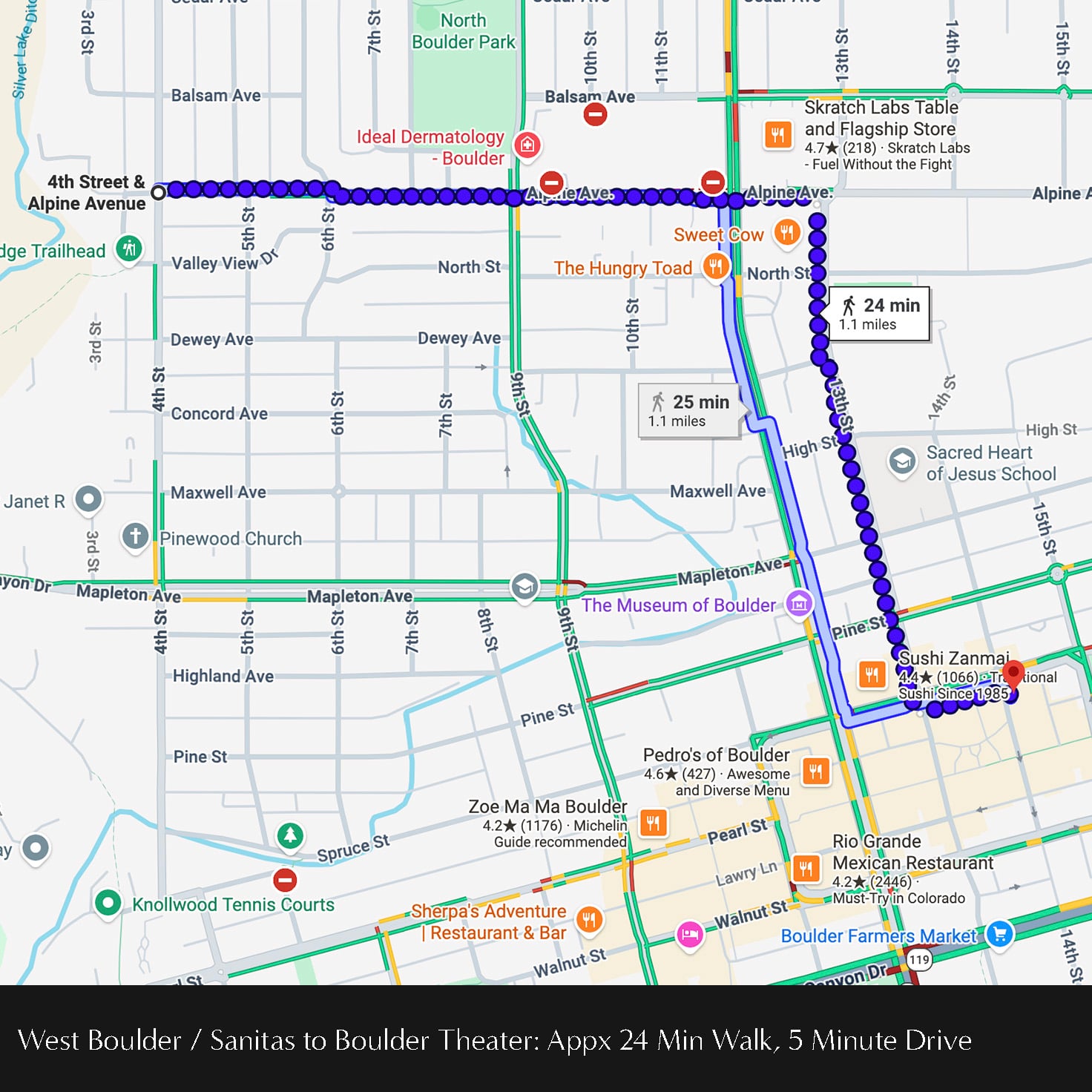
Rental outlook: Very strong
Potential ISV: High
Likely renter: Affluent attendees seeking both downtown access and a distinctive Boulder experience
Advantages
- Proximity to West Pearl.
- Trail access and an iconic Boulder setting.
- Strong luxury inventory.
- Privacy and views in selected locations.
Constraints
- Terrain and winter walking conditions.
- Limited parking on some streets.
- Greater distance from CU venues than downtown or Whittier.
Projected Successful Rental Performance
- Three-bedroom home: $1,000 to $1,750 per night
- Four- or five-bedroom luxury home: $1,750 to $3,500 per night
- Exceptional home: $3,000 to $5,000 or more per night
Projected 2035 ISV Scenario
- Well-positioned property: 4% to 7%
- Premier property with proven performance: 6% to 10%
Newlands
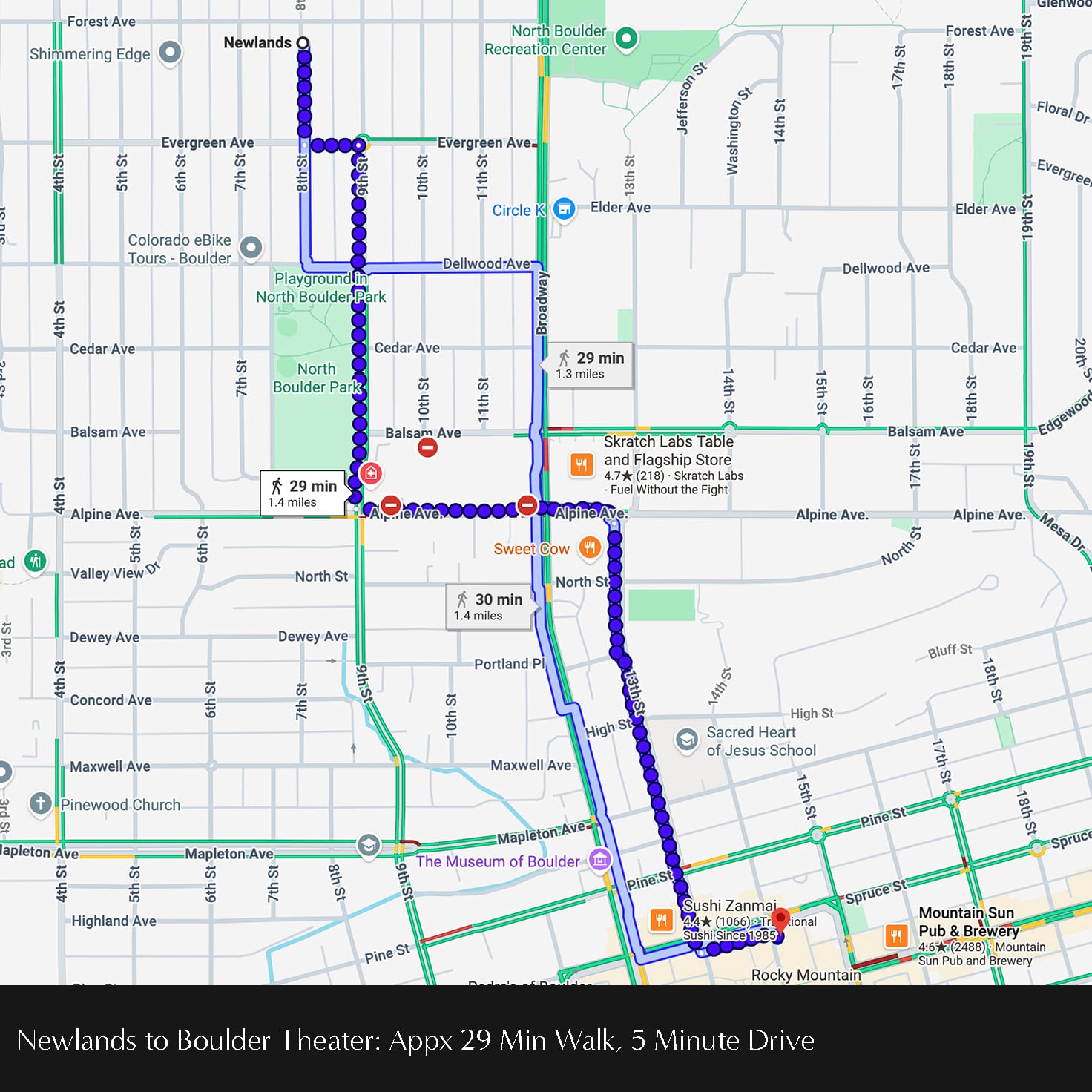
Rental outlook: Strong, particularly for larger homes
Potential ISV: High for luxury properties
Likely renter: Executives, sponsors, families, and production groups prioritizing privacy
Advantages
- Larger homes and lots.
- Quiet residential environment.
- Proximity to North Boulder and trails.
- Strong executive appeal.
Constraints
- Less walkable to festival centers.
- Greater reliance on transportation.
- Residential character may limit event-related use.
Projected Successful Rental Performance
- Three-bedroom home: $800 to $1,300 per night
- Four-bedroom updated home: $1,200 to $2,000 per night
- Five-bedroom luxury home: $1,750 to $3,250 per night
Projected 2035 ISV Scenario
- Typical property: 2% to 5%
- Large proven luxury rental: 4% to 8%
Chautauqua
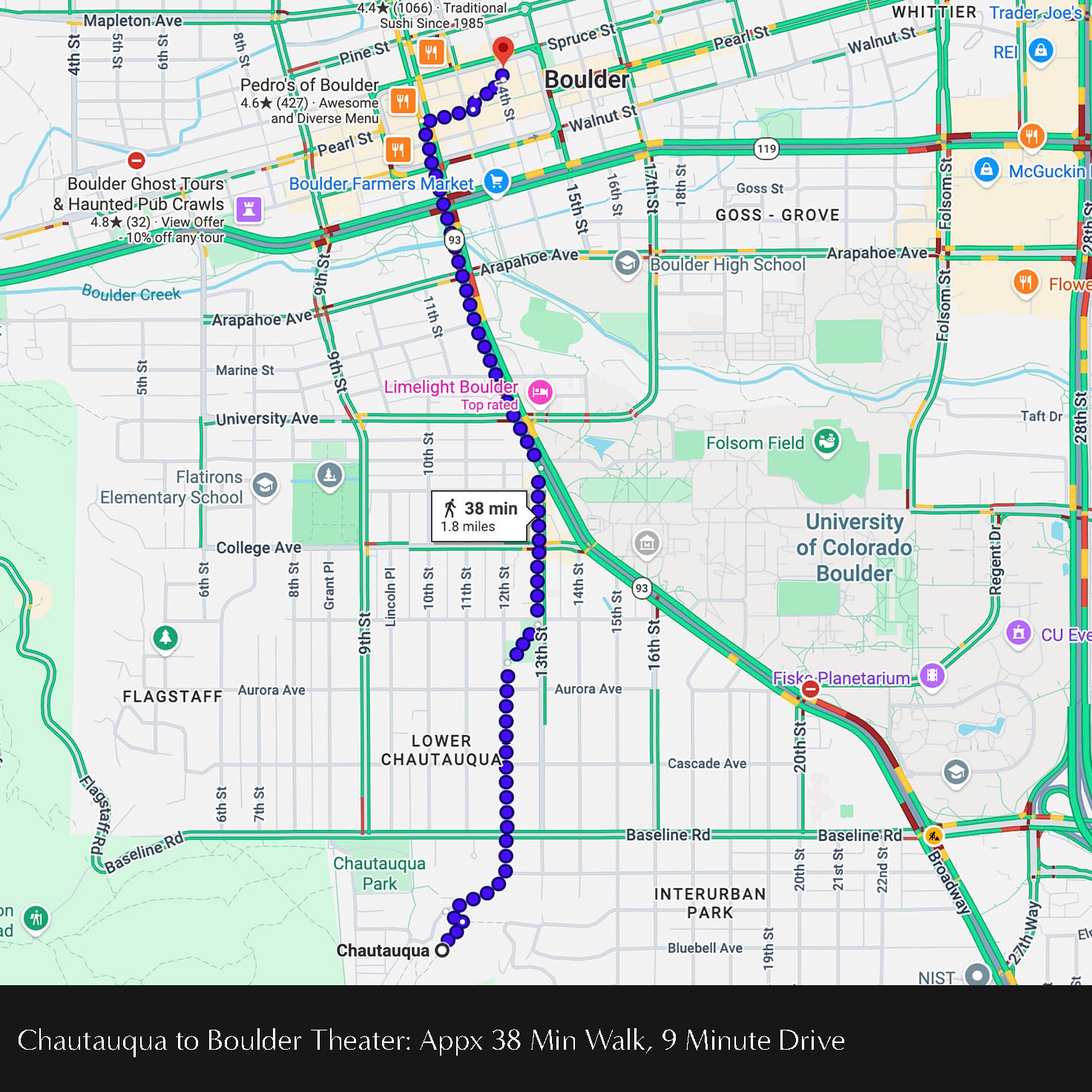
Rental outlook: Moderate to strong
Potential ISV: Moderate to high
Likely renter: Affluent visitors prioritizing beauty, history, and access to the Flatirons
Advantages
- Internationally recognizable Boulder setting.
- Architectural and historic appeal.
- Access to trails and open space.
- Proximity to CU and central Boulder.
Constraints
- Winter transportation and parking.
- Distance from downtown activity.
- Older homes may have smaller bedrooms or fewer bathrooms.
Projected Successful Rental Performance
- Two- or three-bedroom home: $700 to $1,300 per night
- Four-bedroom updated home: $1,200 to $2,200 per night
- Exceptional view property: $2,000 to $3,500 or more per night
Projected 2035 ISV Scenario
- Typical property: 2% to 5%
- Exceptional rental property: 4% to 7%
University Hill and Nearby CU Areas
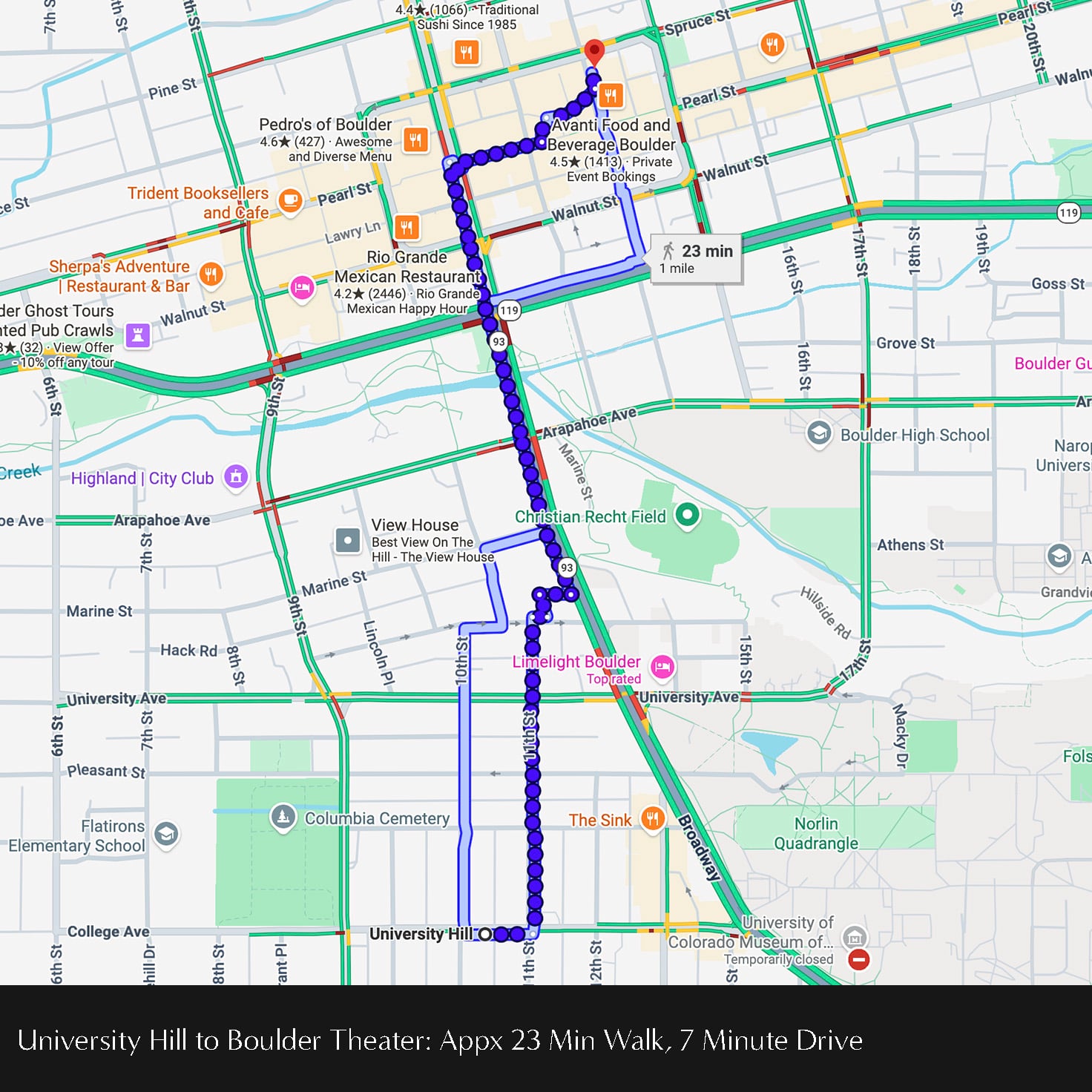
Rental outlook: Strong but highly dependent on exact location and property quality
Potential ISV: Moderate
Likely renter: Filmmakers, staff, younger industry professionals, and groups using CU venues
Advantages
- Access to CU festival facilities.
- Restaurants and services.
- New hotel inventory nearby.
- Potential transportation hub.
Constraints
- Student-oriented housing and noise.
- Inconsistent property quality.
- Parking limitations.
- Some buyers may not assign a lasting luxury premium.
Projected Successful Rental Performance
- One-bedroom unit: $300 to $500 per night
- Two-bedroom unit: $450 to $750 per night
- Three- or four-bedroom updated home: $750 to $1,500 per night
Projected 2035 ISV Scenario
- Typical property: 1% to 4%
- High-quality property near major venues: 3% to 6%
Boulder Junction and East-Central Boulder
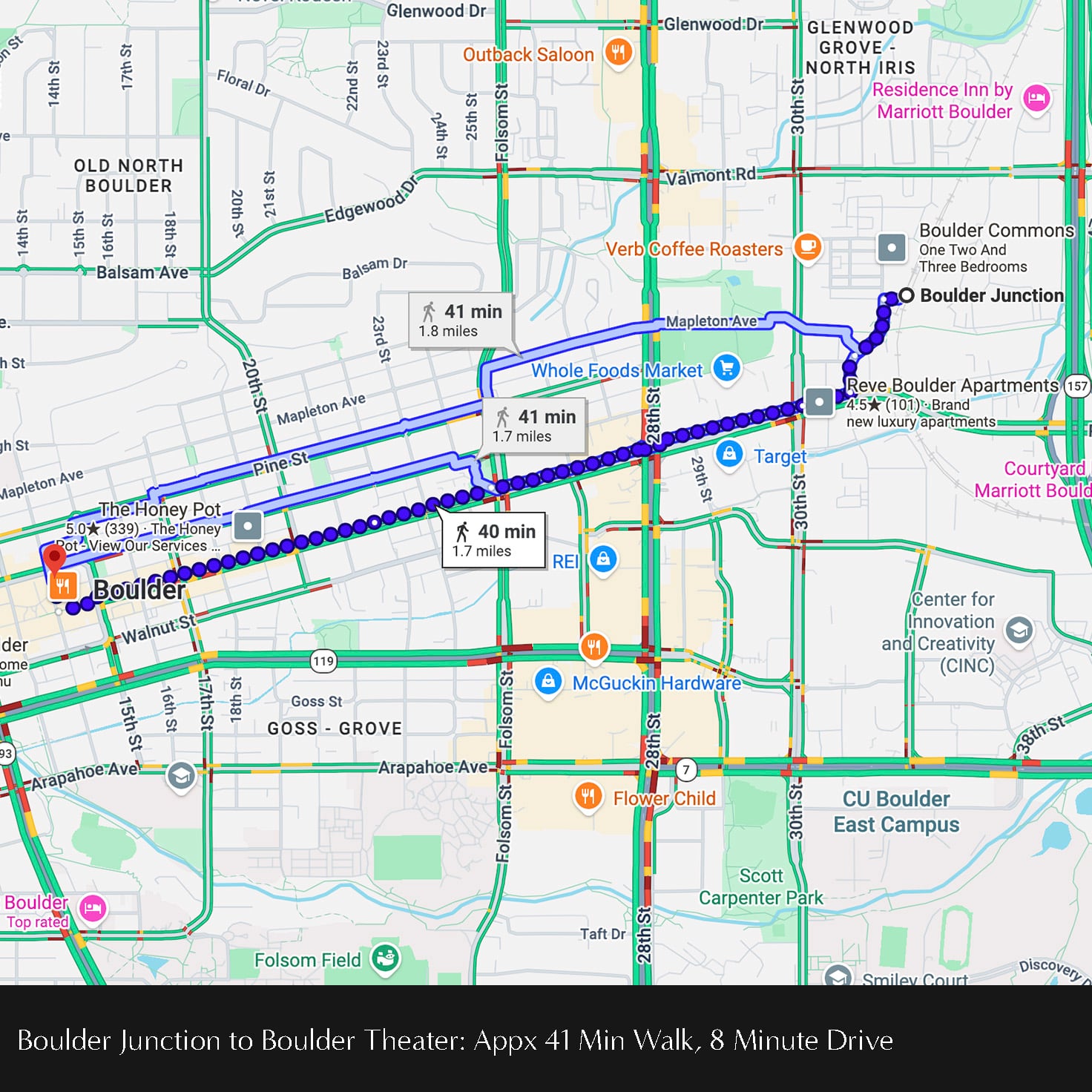
Rental outlook: Moderate, with upside from transportation
Potential ISV: Moderate
Likely renter: Visitors prioritizing transit, newer construction, and practical access
Advantages
- Transportation connections.
- Newer apartments and condominiums.
- Access to services and commercial areas.
- Potential lodging and redevelopment growth.
Constraints
- Less traditional Boulder character.
- Not generally walkable to Pearl Street.
- Long-term value depends heavily on festival transit.
Projected Successful Rental Performance
- One-bedroom unit: $300 to $500 per night
- Two-bedroom unit: $450 to $750 per night
- Townhome: $650 to $1,100 per night
Projected 2035 ISV Scenario
- Typical property: 1% to 3%
- Strong transit-oriented property: 2% to 5%
North Boulder
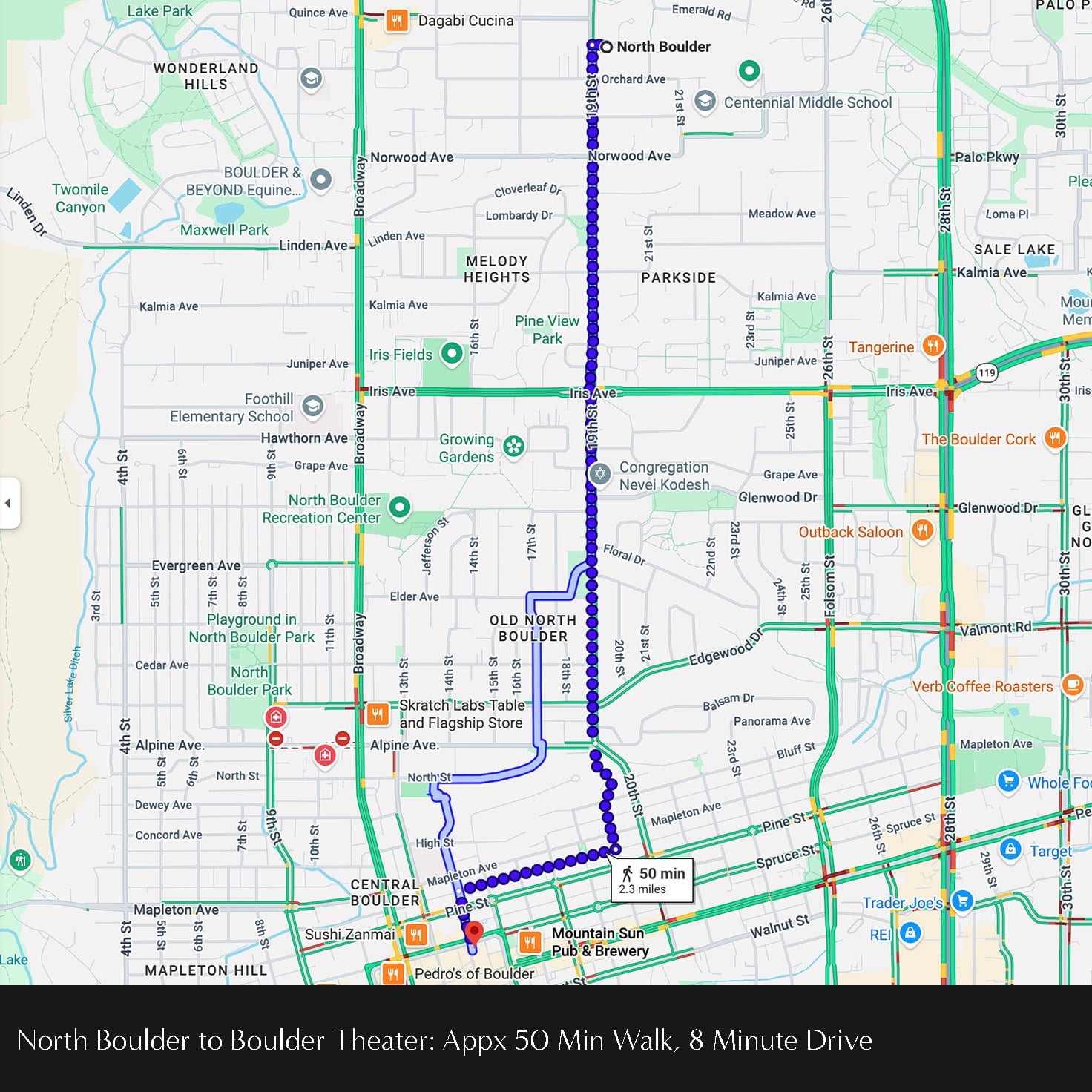
Rental outlook: Moderate to strong for larger homes
Potential ISV: Moderate
Likely renter: Families, corporate groups, and longer-stay visitors
Advantages
- Larger and newer homes in selected areas.
- Restaurants and neighborhood amenities.
- Privacy.
- Access to North Boulder recreation and trails.
Constraints
- Transportation dependence.
- Distance from CU venues.
- Performance will vary greatly by neighborhood.
Projected Successful Rental Performance
- Two-bedroom unit: $450 to $700 per night
- Three-bedroom home: $700 to $1,200 per night
- Four- or five-bedroom luxury home: $1,200 to $2,500 per night
Projected 2035 ISV Scenario
- Typical property: 1% to 4%
- Large, proven rental: 3% to 6%
Table Mesa and South Boulder
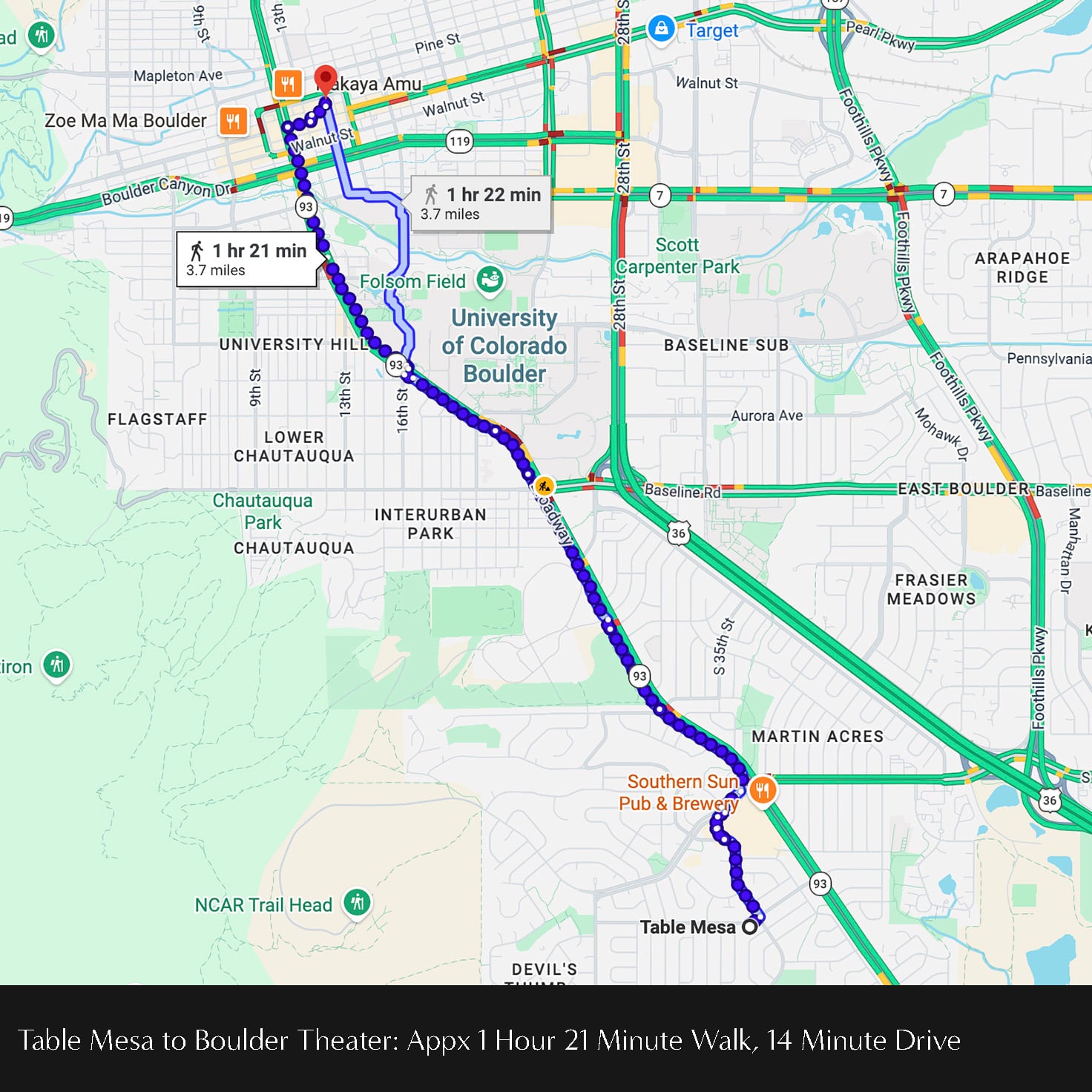
Rental outlook: Moderate
Potential ISV: Low to moderate
Likely renter: Families, budget-conscious groups, and attendees with vehicles or dedicated transportation
Advantages
- Larger homes than many central neighborhoods.
- Good regional road access.
- Neighborhood services.
- Potential value relative to central Boulder.
Constraints
- Limited walkability to festival venues.
- Strong reliance on shuttles, rideshare, or private vehicles.
- Lower prestige for festival-specific renters than central luxury neighborhoods.
Projected Successful Rental Performance
- Two-bedroom unit: $350 to $600 per night
- Three-bedroom home: $600 to $1,000 per night
- Four-bedroom updated home: $850 to $1,500 per night
Projected 2035 ISV Scenario
- Typical property: 0.5% to 3%
- Strong group-oriented property: 2% to 5%
Gunbarrel
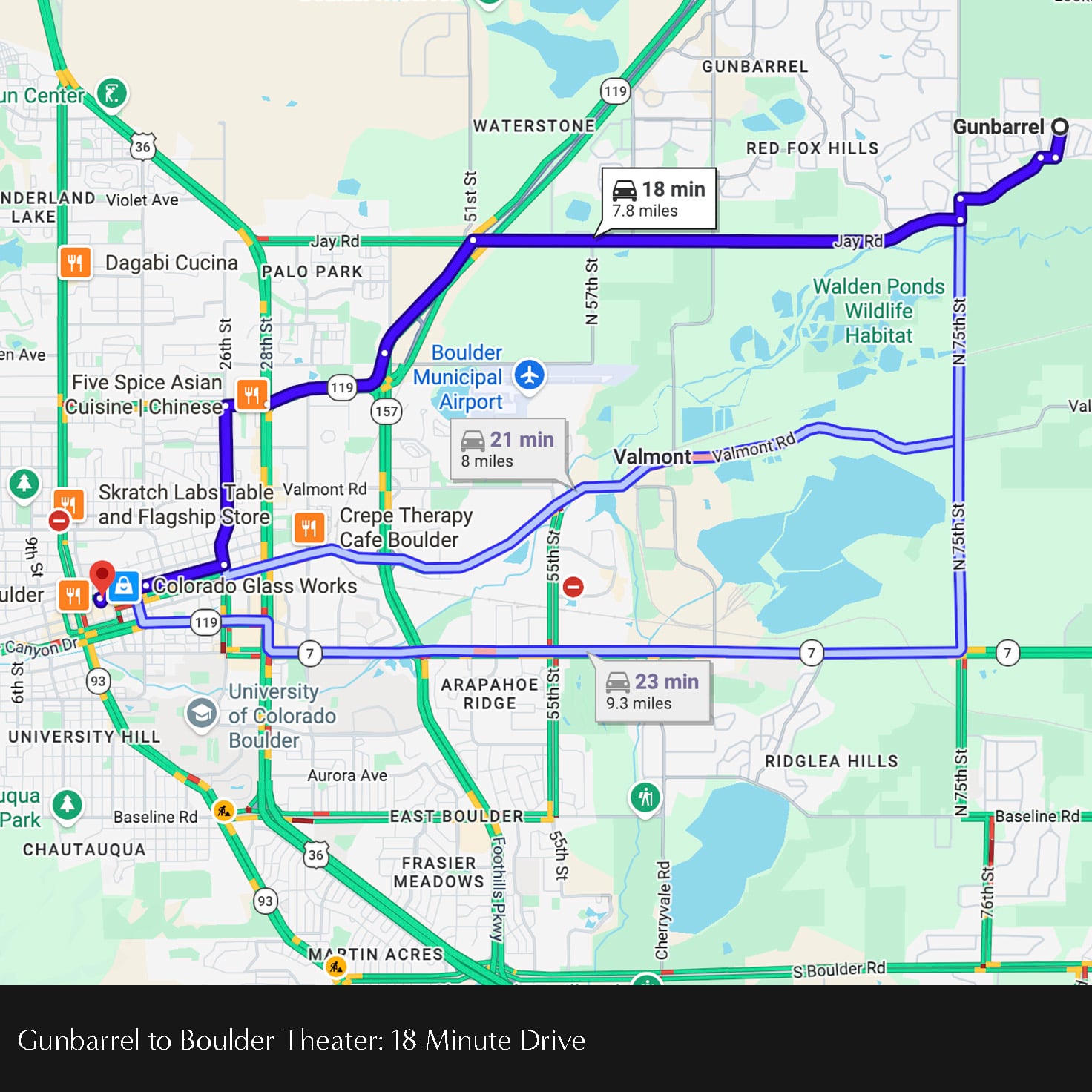
Rental outlook: Limited to moderate
Potential ISV: Low
Likely renter: Price-conscious attendees, staff, and visitors with transportation
Advantages
- Lower prices.
- Larger units and parking.
- Access to northeast Boulder employers and roads.
Constraints
- Distance from venues.
- Weak walkability.
- Travel time and winter transportation uncertainty.
Projected Successful Rental Performance
- One-bedroom unit: $200 to $350 per night
- Two-bedroom unit: $300 to $500 per night
- Three- or four-bedroom home: $500 to $900 per night
Projected 2035 ISV Scenario
- Typical property: 0% to 2%
- Unusually well-positioned property: 1% to 3%
Louisville and Superior
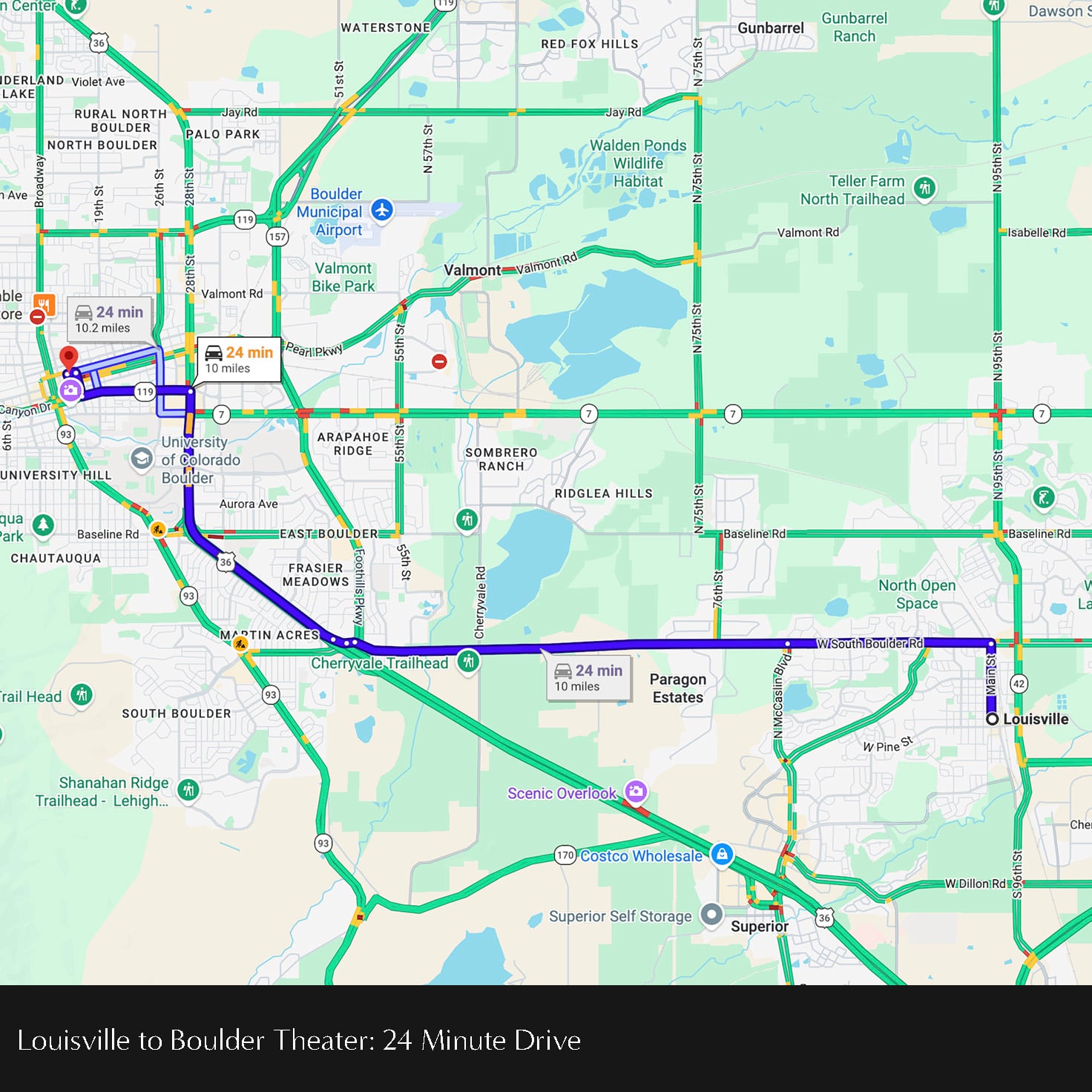
Rental outlook: Moderate overflow market
Potential appreciation effect: Minimal and indirect
Likely renter: Families, budget-conscious attendees, and visitors prioritizing highway access
Advantages
- Attractive communities.
- More parking and suburban convenience.
- Access toward Denver International Airport.
- Potentially lower rates than Boulder.
Constraints
- Not part of the immediate festival environment.
- Transportation and traffic.
- Competition from hotels and ordinary short-term rentals.
Projected Successful Rental Performance
- One-bedroom unit: $200 to $350 per night
- Two-bedroom unit: $300 to $500 per night
- Three- or four-bedroom home: $450 to $900 per night
Projected Sundance-Related Appreciation Scenario Through 2035
- 0% to 2%, primarily through regional recognition and occasional overflow demand rather than direct festival value.
Lafayette
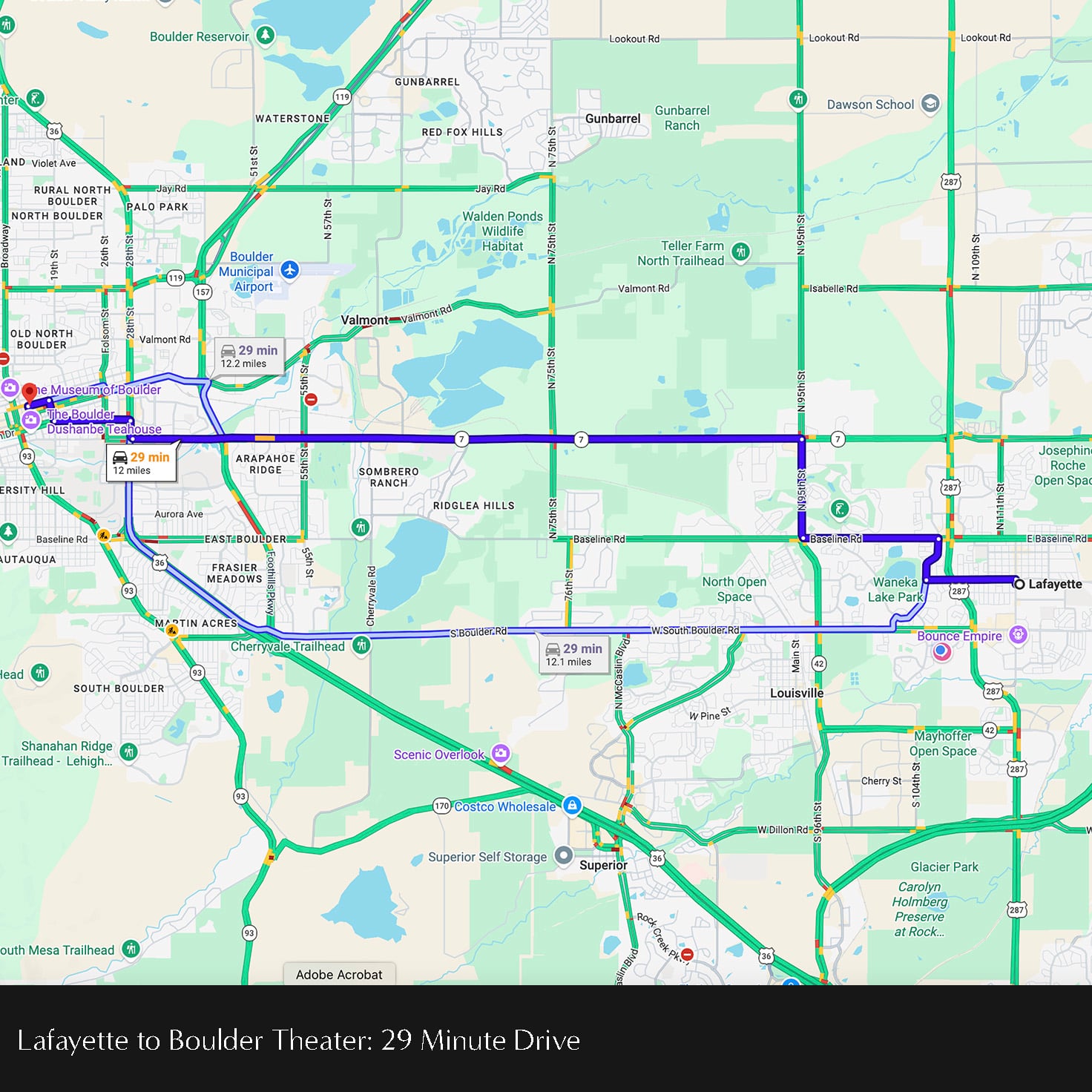
Rental outlook: Moderate to limited overflow
Potential appreciation effect: Minimal
Likely renter: Price-sensitive visitors and festival workers
Projected Successful Rental Performance
- One-bedroom unit: $175 to $300 per night
- Two-bedroom unit: $250 to $450 per night
- Three- or four-bedroom home: $400 to $750 per night
Projected Sundance-Related Appreciation Scenario Through 2035
- 0% to 1.5%
Longmont
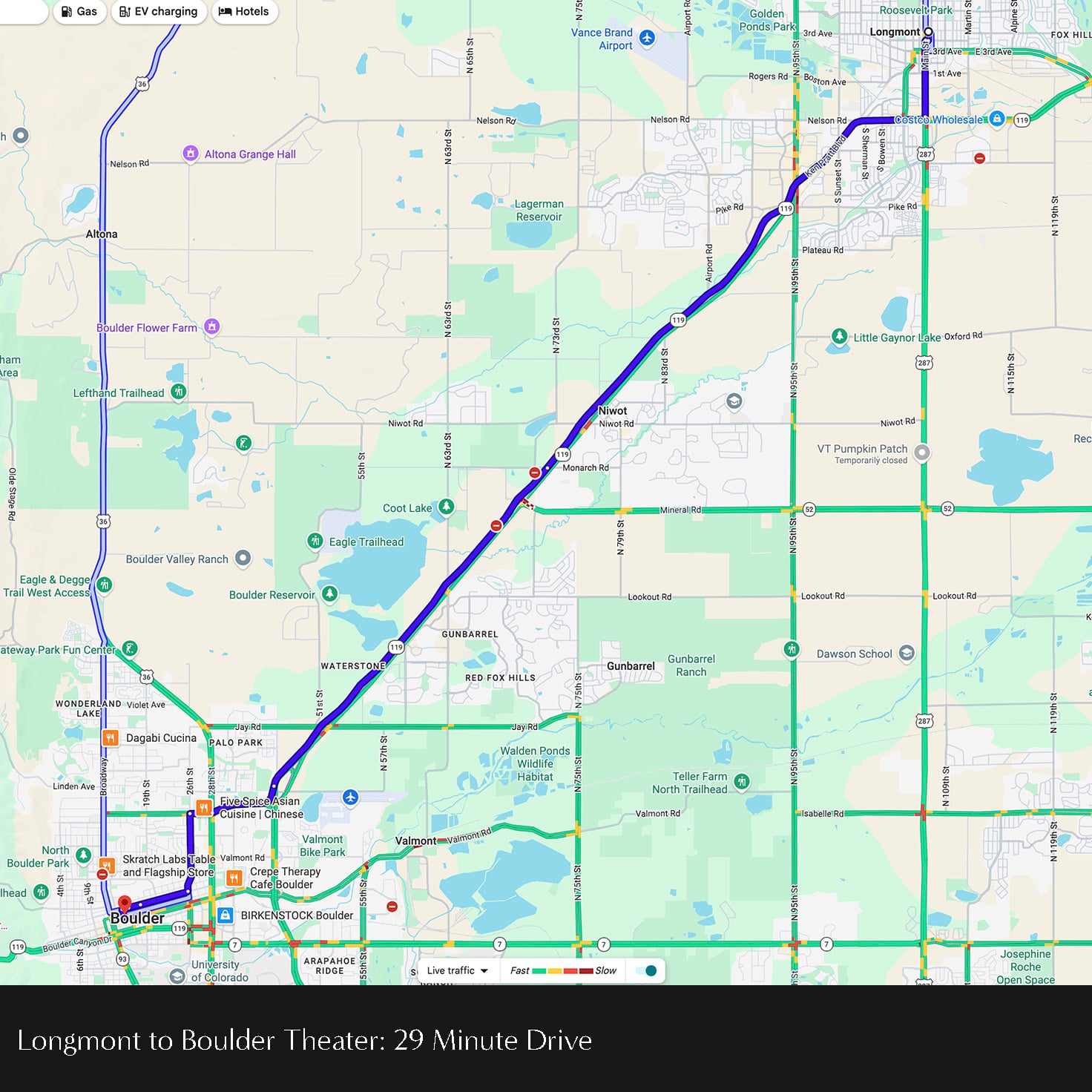
Rental outlook: Limited overflow
Potential appreciation effect: Minima
Likely renter: Staff, longer-stay workers, and highly price-sensitive attendees
Projected Successful Rental Performance
- One-bedroom unit: $150 to $275 per night
- Two-bedroom unit: $225 to $400 per night
- Three- or four-bedroom home: $350 to $700 per night
Projected Sundance-Related Appreciation Scenario Through 2035
- Approximately 0% to 1.5%
Broomfield, Westminster, and Denver
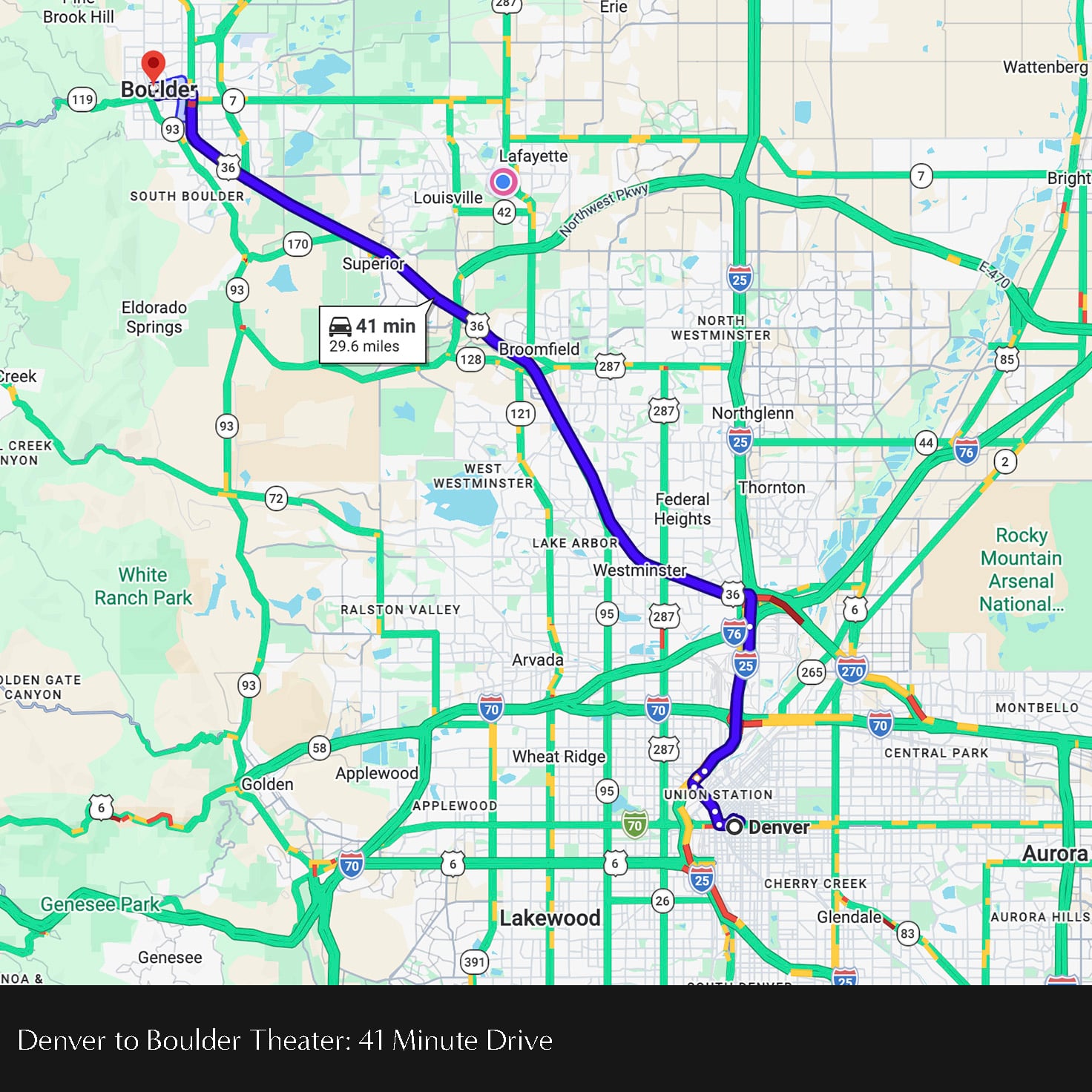
These locations may absorb substantial overflow because the regional lodging inventory greatly exceeds Boulder’s in-city inventory.
Their participation may be economically important to the festival but is unlikely to create a measurable Sundance-specific residential appreciation premium. The primary effect should be temporary lodging demand.
What Sellers Should Do
Sellers Planning to List Before the First Festival
Sellers should market Sundance as a future opportunity rather than an established income stream.
Appropriate language includes:
- Eligible or potentially eligible for festival lodging.
- Convenient access to announced venues.
- Strong configuration for groups.
- Potential for seasonal income, subject to licensing and demand.
- Speculative gross income should not be presented as guaranteed.
Sellers Planning to List After 2027
Owners should document:
- Listing dates.
- Inquiries.
- Completed bookings.
- Contracts.
- Gross revenue.
- Fees and operating costs.
- Guest feedback.
- Length of stay.
The strongest future claim will not be:
- “This home could rent during Sundance.”
It will be:
- “This home produced verified festival revenue of $ in 2027 and $ in 2028.”
Sellers Planning to Hold for Several Years
The most useful improvements are likely to be those that also improve ordinary resale value:
- Additional or improved bathrooms.
- Flexible bedrooms.
- Updated kitchens.
- High-quality internet.
- Comfortable gathering areas.
- Durable finishes.
- Secure owner storage.
- Improved parking.
- Professional landscape lighting and way finding.
Owners should be cautious about making expensive festival-specific improvements until actual demand has been observed.
Risks to the Projections
The Sundance effect could be smaller than projected if:
- Attendance underperforms.
- Visitors resist Boulder lodging prices.
- Many attendees stay elsewhere.
- Transportation is difficult.
- Homeowners flood the market with rental supply.
- Sundance shortens or changes its Boulder commitment.
- Hotel construction absorbs demand.
- The film and media industries contract.
The effect could be larger if:
- Boulder becomes the festival’s successful long-term home.
- Corporate participation expands.
- Guests strongly prefer residential lodging.
- Transportation connects neighborhoods effectively.
- Sundance stimulates additional year-round film, media, and cultural activity.
Final Assessment
Sundance should not be presented to Boulder sellers as an automatic appreciation event.
The more defensible conclusion is:
Sundance creates a new annual use and marketing opportunity whose long-term value will be determined property by property.
For many homes, the effect may be negligible.
For well-positioned homes, the festival may produce useful annual income and a modest resale advantage.
For a limited group of exceptional properties, particularly those that are walkable, legally rentable, group-friendly, and able to establish a record of premium bookings, the combined effect could become financiallymeaningful over the next decade.
The first Boulder festival in January 2027 will establish the initial evidence. The second and third festivals will reveal whether the results are repeatable. Meaningful resale evidence is most likely to emerge between 2028 and 2032, with a clearer long-term valuation effect developing only after several years of documented performance.
Source and Methodology Notes
Verified information in this report draws primarily from:
- Sundance Institute announcements and economic impact reports.
- City of Boulder festival and rental licensing materials.
- Official Sundance and Boulder lodging resources.
- Current reporting regarding lodging capacity and festival preparations.
- Published local property management estimates.
The Incremental Sundance Value ranges, neighborhood rankings, successful rental projections, and hypothetical financial examples are original scenario analyses prepared for this report. They have not yet been validated through completed Boulder Sundance transactions.
This report is for general informational and marketing purposes. It is not an appraisal, investment recommendation, tax opinion, legal opinion, or guarantee of rental performance or property appreciation.
Sundance & Boulder Real Estate: Frequently Asked Questions
Will the Sundance Film Festival increase Boulder home values?
- Possibly, but not equally across all properties. Sundance is more likely to create additional value for homes that are close to festival venues, legally eligible for short-term rentals, and well suited for executive or group accommodations. While the festival may strengthen Boulder's national profile, long-term appreciation will still be driven primarily by factors like inventory, interest rates, and overall buyer demand.
Should I wait to sell my home until after Sundance?
- Not necessarily. While Sundance could eventually create additional demand for certain properties, there is no guarantee that waiting will result in a higher sale price. Sellers should weigh current market conditions, inventory levels, mortgage rates, and their personal goals rather than relying solely on the festival to increase value.
Can I rent my Boulder home during the Sundance Film Festival?
- Some homeowners may be eligible, but Boulder has specific regulations governing short-term rentals and Festival Lodging Licenses. Eligibility depends on your property's location, licensing requirements, and city regulations. Before listing your home, it's important to verify that it qualifies under current City of Boulder rules.
How much could I earn by renting my home during Sundance?
- Rental income will vary depending on your home's size, location, condition, and proximity to festival venues. Larger, updated homes in desirable neighborhoods may command significantly higher nightly rates than smaller or less centrally located properties. Because 2027 will be the first Sundance Film Festival in Boulder, actual rental performance is still unknown, and published asking prices should not be confused with completed bookings.
Which Boulder neighborhoods are expected to benefit the most?
- Neighborhoods with strong walkability and convenient access to festival venues are expected to see the greatest demand. Areas such as Downtown Boulder, Mapleton Hill, Whittier, Newlands, and neighborhoods near Pearl Street may be particularly attractive to festival attendees, filmmakers, and corporate guests. However, every property should be evaluated individually based on its location, amenities, and rental potential.
Will Boulder become the next Park City?
- Probably not, and that's not necessarily a bad thing. Park City's housing market evolved alongside Sundance over more than 40 years as a resort community with a large second-home market. Boulder already has a mature housing market, a thriving technology sector, a major university, and strict short-term rental regulations. Sundance is expected to become another positive influence on Boulder real estate rather than completely redefining the market.
Will every home in Boulder benefit from Sundance?
- No. The festival is unlikely to affect every neighborhood or property equally. Homes with walkability, multiple bedrooms and bathrooms, parking, attractive gathering spaces, and legal rental eligibility are expected to benefit more than homes farther from festival activity or those that cannot be rented.
What features make a home more attractive to Sundance visitors?
- Properties that offer comfortable accommodations for families, executives, production teams, or corporate groups are likely to be in the greatest demand. Features such as updated kitchens, multiple bathrooms, dedicated workspaces, off-street parking, outdoor entertaining areas, and flexible bedroom layouts may make a property more appealing during the festival.
How long will it take before we know Sundance's true impact on Boulder real estate?
- The first festival in January 2027 will provide valuable information about rental demand and visitor behavior, but it will likely take several years before enough sales data exists to determine whether Sundance has created measurable appreciation in Boulder home values. The strongest evidence will come from documented rental histories and resale activity between 2028 and 2032.
How can I find out what my home might be worth because of Sundance?
- Every property is different. Factors such as neighborhood, walkability, home size, condition, parking, and rental eligibility all influence potential value. If you're curious how Sundance may affect your home's marketability or future value, we'd be happy to provide a personalized analysis based on your property and today's market conditions.
Check out this article next